
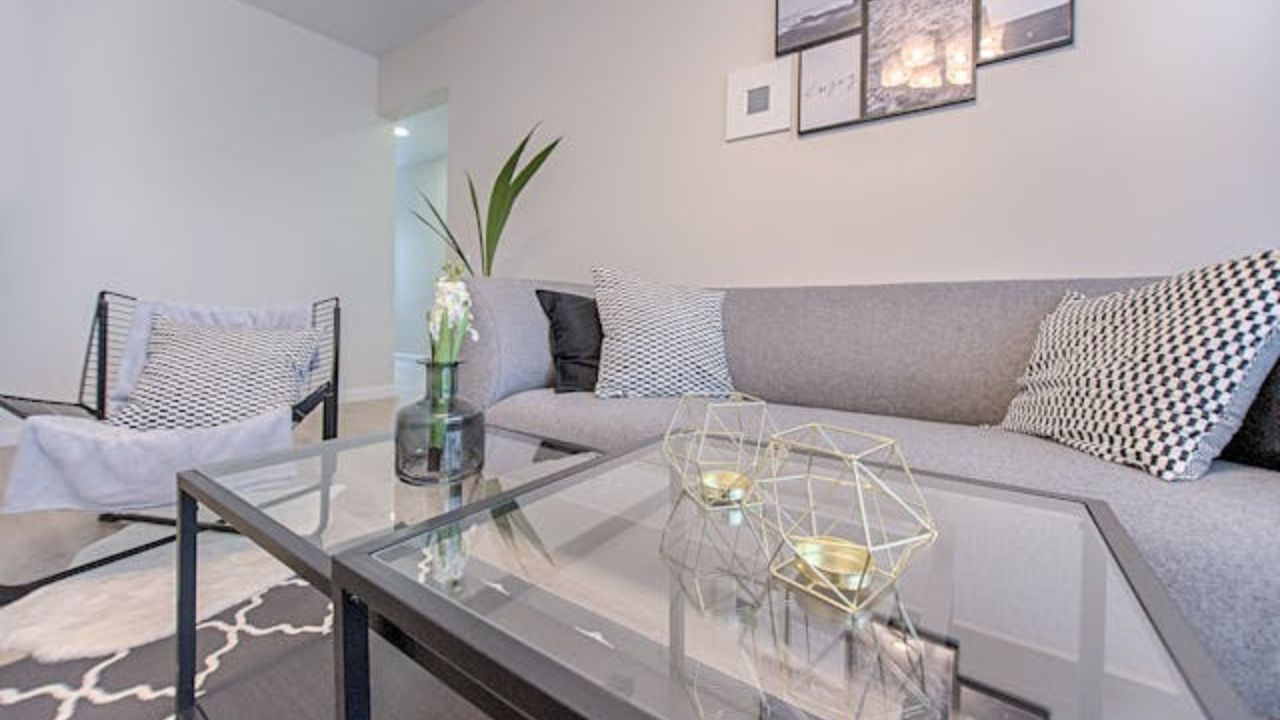
According to a report published by House Beautiful, the traditional “rule of three” — which dictates the use of decorative objects in groups of three — is officially losing ground among designers.
+ The most functional homes follow a pattern — and organizers confirm it
Although this guideline was for decades the easiest shortcut to creating balanced compositions, designers now argue that it has become predictable, inorganic, and in many cases, stifling.
Designer Jan Odesanya, quoted by House Beautiful, sums up the aesthetic fatigue:
“Every room looked like it was posing for a magazine, not housing real people. Three candles, three books, three of everything. Pretty, but lifeless.”
The publication highlights that the new goal of contemporary décor is to create spaces with genuine personality, allowing natural disorder, visual flow, and combinations that express who lives there — not just technique.
Numbers still matter, but with intention
As House Beautiful found in conversations with designer Brad Ramsey, the new rule is simple: there is no fixed rule anymore.
“Sometimes it’s two, sometimes five. When the combination of shape, height, and texture feels balanced, the numbers stop mattering.”
Designer Jen Baxter, also interviewed by the magazine, proposes an emotional principle:
- Odd numbers → energy and vibrancy
- Even numbers → calm and softness
For this reason, in bedrooms Baxter prefers pairs of objects — such as two embroidered pillows — to create visual rest rather than tension.
Fewer groupings, greater visual impact
House Beautiful also notes that for designers like Kerith Flynn and Kristina Lawrence, a single statement piece can be more powerful than any numerical composition.
“One large bowl can have more impact than stacks of objects competing for attention,” says Lawrence.
Designer Olma Fuentes suggests:
- a single sculptural vase on a pedestal
- a curved, statement sofa instead of multiple seats without intention
The “cut it in half” rule
A House Beautiful report also reveals Lauren Saab’s technique: decorate first, then remove half.
“This creates space and allows materials to breathe.”
The advice is reinforced by designer Christine Jahan:
- take a black-and-white photo
- if the space still feels balanced, the composition works
The new luxury: empty space
House Beautiful states that current décor embraces “breathing room.” Real homes need free surfaces, movement, and circulation — not static displays.
Odesanya sums it up:
“Empty space is the design element. It’s what’s doing the work.”
In other words: authenticity replaces symmetry.
Source: House Beautiful. This content was created with the help of AI and reviewed by the editorial team.
